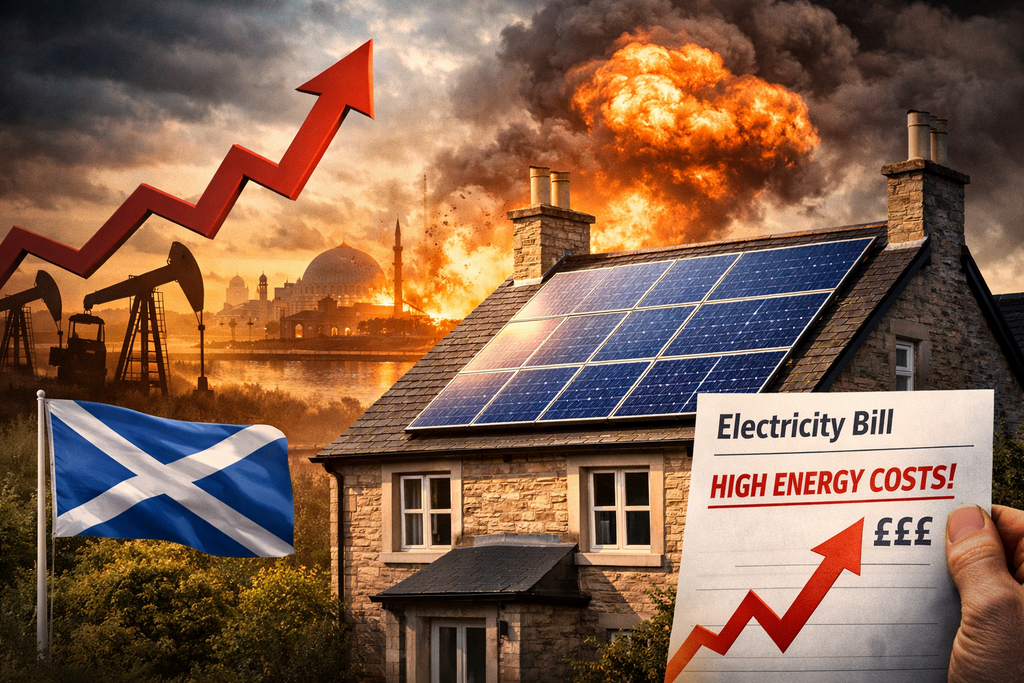
War drives up energy prices in Scotland
The Iran War Energy Price Crisis (Current - March 2026)
The conflict with Iran has created a severe energy price shock in the UK. According to recent reports:
- Gas prices have surged over 60% since the conflict escalated in late February 2026
- UK energy bills are expected to rise again in 2026, with Cornwall Insight estimating the price cap will jump by nearly £200 from July 2026
- The Bank of England has warned that higher energy prices could cause a broader rise in prices across the economy and potentially derail interest rate cuts
- Unlike the 2022 energy crisis, this shock is having a considerably bigger impact on oil prices and comes when the economy is in a weaker position to deal with it
The Solar Panel Boom in Scotland
The surge in demand is already evident:
Immediate Surge (March 2026):
- 27% increase in solar installation enquiries across the UK since the Middle East conflict began, according to Octopus Energy data
- Greg Jackson, CEO of Octopus Energy, reported that "interest in solar has shot up 50%" since the conflict began
- Homeowners are described as seeing their rooftops as "a frontline of their financial resilience"
Scotland's Leading Position:
- Argyll and Bute, Scotland, leads the entire UK in domestic solar installations per household in 2025
- As of August 2025, 136,470 homes in Scotland had solar panels (5.4% of Scottish households)
- Scotland has approximately 180,000 solar panel installations as the leading renewable technology
Record-Breaking Context:
- The UK broke its yearly record for rooftop solar installations in 2025 with 206,682 installations by November, pushing total certified small-scale installations to 1.85 million
- Nearly 100,000 domestic systems were installed in the UK in the first half of 2025 alone—a 22% increase from 2024 and the highest rate since 2015
Battery Storage: The Critical Companion
The demand isn't just for panels—battery storage is surging too:
- Battery installations nearly doubled year-on-year in 2025
- In the first nine months of 2025, battery energy storage systems increased by 122% compared to the same period in 2024
- Scotland is developing its own domestic battery manufacturing capacity—Scottish First Minister visited the country's first domestic BESS factory in March 2026
Government Response & Policy Context
The UK government is actively accelerating solar deployment in response to the crisis:
- "Plug-in" solar panels (low-cost balcony/outdoor panels) will be available in shops within months, with retailers like Lidl and Amazon partnering with the government
- The Future Homes Standard came into force on March 24, 2026 (today), mandating solar panels on the majority of new homes
- Energy Secretary Ed Miliband explicitly stated: "The Iran War has once again shown our drive for clean power is essential for our energy security so we can escape the grip of fossil fuel markets we don't control"
- An innovative "discounted energy" trial launching this winter will predominantly benefit Scotland and the East of England, offering cheap electricity on windy days when wind farms would otherwise be paid to switch off
Economic Drivers
- Installation costs have fallen significantly: from over £10,400 in April 2023 to under £7,600 by April 2025
- Typical annual savings: A home with rooftop solar can save around £530 per year based on current energy price caps , with some households seeing savings of up to 92% on energy bills when combined with smart tariffs and battery storage
- New homes built to the Future Homes Standard could save families up to £830 per year compared to standard homes
Scotland's Solar Potential
Despite common misconceptions, Scotland has significant solar potential:
- The island of Hoy in Orkney receives enough solar energy annually to power all of Scotland's electricity, heating, and transport needs
- Solar Energy Scotland is calling for 4-6 GW of installed solar capacity by 2030 (currently under 1 GW)
- Meeting this target could support up to 11,000 new jobs in Scotland by 2030