The world of solar is moving fast. With installations rising dramatically year on year, it's clear there's been a shift in the way people see solar now. It's no longer seen as an optional upgrade, but more now as a necessity, a way to combat the electricity price rises, and let's face it, those have been sharp over the past few years, especially since the Covid 19 pandemic. Anyway, enjoy the blog.
Tom
Tom Kinnaird, Owner of Solar Scotland

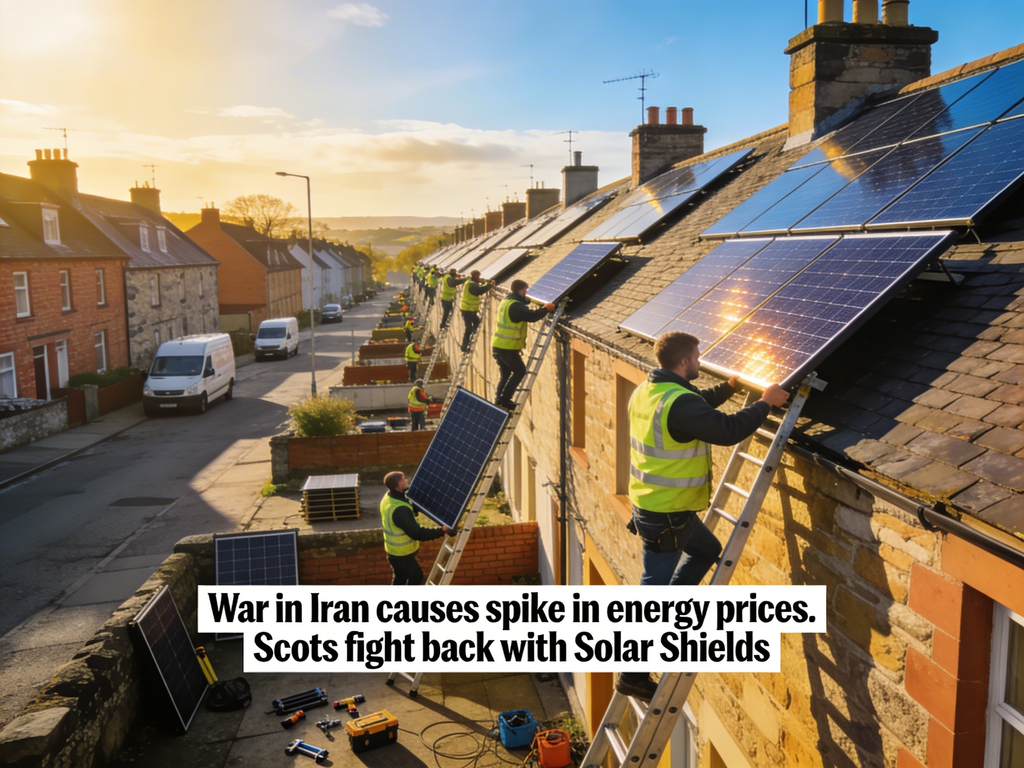
The conflict with Iran has created a severe energy price shock in the UK. According to recent reports:
The surge in demand is already evident:
Immediate Surge (March 2026):
Scotland's Leading Position:
Record-Breaking Context:
The demand isn't just for panels—battery storage is surging too:
The UK government is actively accelerating solar deployment in response to the crisis:
Despite common misconceptions, Scotland has significant solar potential:


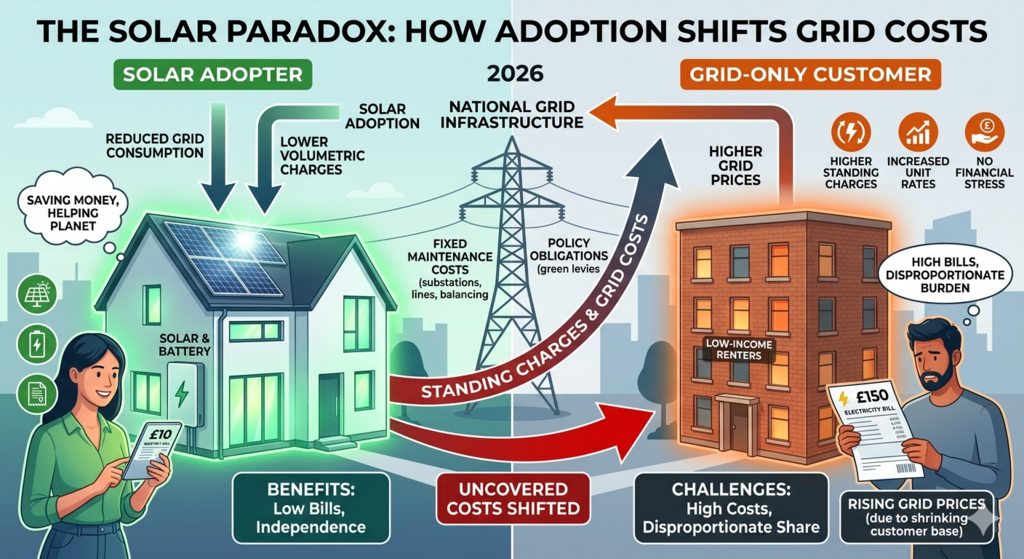
One of the most significant challenges in the modern energy transition is what economists refer to as the "Utility Death Spiral." This phenomenon exemplifies a feedback loop in which rational individual behavior, such as saving money with solar energy, creates systemic challenges for the collective.
Here's a more detailed examination of how this paradox operates and why it is particularly difficult to resolve without fundamentally rethinking energy payment structures.
1. The "Volumetric" Flaw
Most residential energy bills operate on a volumetric basis, meaning households are primarily charged for each kilowatt-hour (kWh) of electricity consumed. However, the costs associated with maintaining the grid are largely fixed.
Fixed Costs: The expense of maintaining infrastructure—such as pylons, transformers, and undersea cables—remains largely the same irrespective of whether they transport 100 units of energy or 1,000.
The Shift: When a household installs solar panels and a battery, they can significantly reduce their "imported" energy by as much as 70%. Under a volumetric billing system, this means they no longer contribute 70% toward covering those fixed costs, despite still depending on the grid for backup during cloudy days or during winter months.
2. The Feedback Loop: A Step-by-Step Breakdown
The "Early Adopter" Phase: Wealthier households invest in solar energy systems, resulting in a substantial decrease in their electricity bills.
The Shortfall: The utility company or grid operator encounters a revenue shortfall because these early adopters are contributing less through volumetric "network charges."
The Price Hike: To address the revenue gap, regulators permit utilities to raise the Standing Charge (the daily fixed fee) or the per-unit charge for all customers.
The Tipping Point: As grid prices increase, the "payback period" for solar installations decreases (e.g., from 10 years to 7 years). This shift makes solar energy more appealing to the "middle market," who previously may not have found the investment justifiable.
The Social Gap: The result is a "residual" customer base—typically renters, those living in apartments, or low-income households—who are unable to install solar panels. They find themselves shouldering the costs of an extensive, 20th-century grid infrastructure while a smaller pool of customers pays for it.
3. The "Grid as a Battery" Myth
Ironically, solar energy users can place greater demands on the grid in some respects rather than alleviating them.
Two-Way Traffic: Traditional grids were designed for one-way energy flow (from power plants to homes). Solar energy necessitates handling a two-way flow, resulting in costly upgrades to local substations.
The Peak Problem: Solar users still rely on the grid during peak demand times, particularly at 7:00 PM in December. Consequently, the grid must be sized to accommodate peak load, meaning that infrastructure cannot be downsized merely because more households have solar panels.
4. Potential Solutions (and Their Controversies)
Regulators are actively seeking ways to address this cycle without penalizing those who choose to adopt green technologies.
The Solar Paradox illustrates a fundamental transformation: the grid is transitioning from merely being a commodity provider (selling electrons) to functioning as an insurance policy (ensuring access when individual systems fail). However, our current billing systems remain anchored in the "commodity" era.
The "Solar Paradox" or "Utility Death Spiral" is inherently structural, but Time-of-Use (ToU) tariffs—like Octopus Agile or other dynamic pricing models—serve as a "software patch" for the existing physical grid.
Instead of charging customers solely based on usage, these tariffs impose charges that reflect when energy is consumed, aligning prices with real-time grid stress.
1. Turning "Free Riders" into "Grid Supporters"
In the classic paradox, solar panel owners have a tendency to "free ride" by relying on the grid as an uncharged battery, drawing power only during peak periods and disregarding it when not needed.
The ToU Fix: By offering low (or even negative) prices for electricity during times of high renewable generation or low demand, the grid encourages these users to absorb excess energy.
Example: On a windy night in 2026, a ToU tariff might reward you with 2p/kWh for charging your home battery or electric vehicle (EV). This prevents the grid from incurring costs to pay wind farms to reduce generation (curtailment), ultimately saving money for everyone.
2. Flattening the "Duck Curve"
The "Duck Curve" represents the dramatic spike in grid demand at sunset, as solar generation diminishes and households switch on their ovens. This spike necessitates costly grid upgrades.
Peak Pricing: ToU tariffs increase the cost during the 4:00 PM to 7:00 PM window significantly.
Behavioral Shift: Solar and battery owners are incentivized to utilize stored energy within this timeframe instead of drawing power from the grid. This behavior helps mitigate the peak load the grid needs to accommodate and could halt the rise in fixed standing charges for all consumers.
3. Smart Automation vs. The Social Gap
A significant risk associated with the Solar Paradox is that it may leave low-income households behind. ToU tariffs work to mitigate this by:
Automated Savings: Modern systems, often referred to as Virtual Power Plants, automatically manage battery usage to "buy low and sell high" without requiring active user engagement.
Community Wealth: By 2026, models like "Social Energy" are emerging, where social housing blocks with shared solar and battery resources strategically utilize ToU tariffs to reduce costs for tenants who cannot afford the technology themselves.
The "2026 Reality Check"
As of April 2026, the UK government has started transferring certain "green levies" from electricity bills to general taxation. This initiative is a proactive attempt to halt the "Death Spiral" by making electricity relatively cheaper than gas, thereby encouraging more people to switch to heat pumps and EVs without the burden of high fixed costs.


Good morning,
The new energy price cap from 1st April – 30th June released from Ofgem is:
24.67 p/kWh (electricity unit rate)
57.21p/kWh (electricity standing charge)
These figures are inclusive of VAT - Ofgem
Please use this new Energy Price Cap on any new quotes signed from 20th March.
Best wishes,
Team EPVS


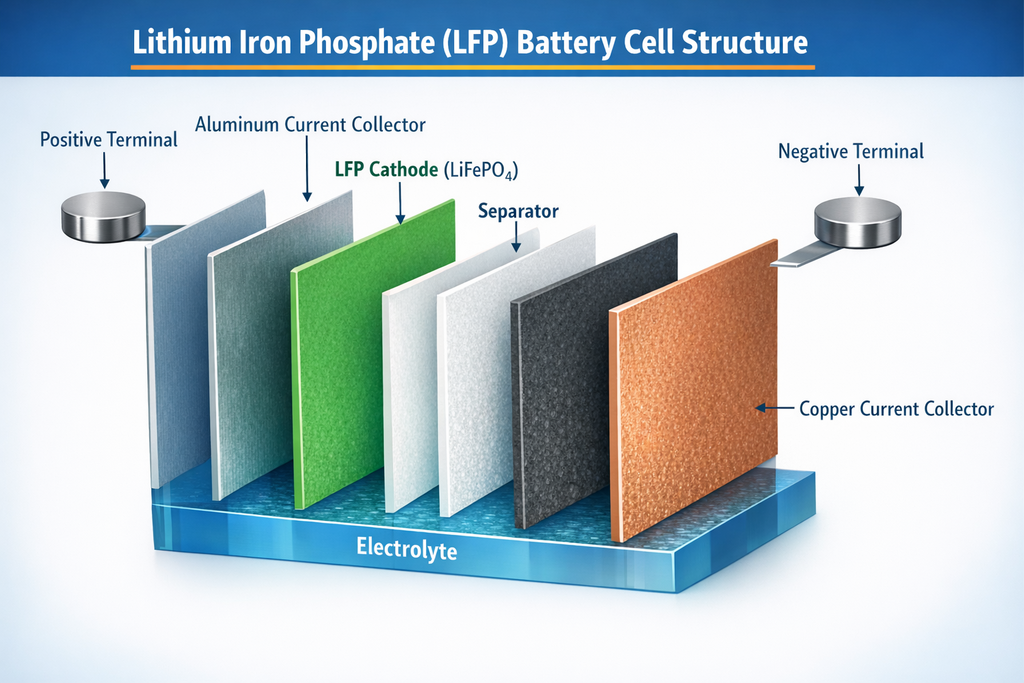
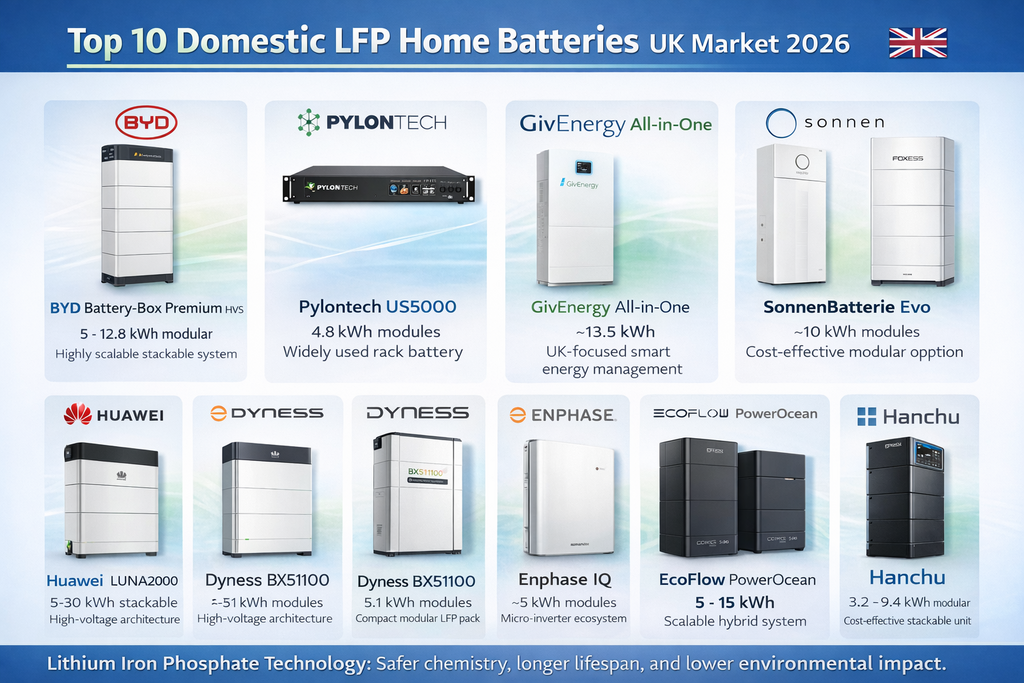
Lithium iron phosphate (LFP) batteries have become a popular choice for home energy storage systems due to their strong safety profile, long lifespan, and environmental advantages. As more households adopt renewable energy sources such as solar power, LFP batteries provide a reliable and efficient way to store excess electricity for later use.
One of the most important benefits of LFP batteries is their safety. Compared to other lithium-ion battery chemistries, LFP batteries are far more stable and less prone to overheating or thermal runaway. This makes them a safer option for residential environments where battery systems are installed inside homes or garages. Their chemical structure also reduces the risk of fire or explosion, which is a key concern for homeowners.
Another major advantage is their long lifespan. LFP batteries can typically last between 3,000 and 6,000 charge cycles, which can translate to more than 10 years of regular use in a home energy storage system. This durability means homeowners do not need to replace the battery as frequently, reducing both long-term costs and waste.
LFP batteries are also known for their reliability and efficiency. They maintain stable performance across many charge and discharge cycles and provide consistent power output. This makes them well suited for storing solar energy generated during the day and supplying electricity to the home during the evening or during power outages.
Environmental impact is another important factor. LFP batteries do not contain cobalt or nickel, materials that are often associated with environmentally damaging mining practices. Their simpler chemical composition makes them easier and safer to recycle, supporting more sustainable battery production and disposal.
In conclusion, lithium iron phosphate batteries offer several key advantages for home energy storage, including enhanced safety, long operational life, reliable performance, and improved environmental sustainability. These benefits make them an increasingly attractive solution for homeowners looking to store renewable energy and reduce their reliance on the electrical grid.